Showing posts with label perfumery. Show all posts

Monday, February 8, 2010

Scents and Sensibility: Brian Eno on perfumery


Whenever I start to wonder if this perfumery thing isn't just a little,  um, frivolous, I look up and read this article. It's been kicking around the web for awhile, and it's quite a bit of text, but if you haven't read it, do.  The original article came from Details magazine.

(Image and article credits will appear at the end.)


"I started thinking about smell in 1965. At art college, a friend and I made a little collection of evocative aromas, housed in about fifty small bottles. There was rubber, naptha, motorcycle dope, cuir de russe (used to make leather smell like leather rather than dead animals), gasoline, ammonia, juniper wood. In 1978, in a neglected and unlikely part of London, I discovered an old pharmacy that was crammed with oils and absolutes.

Their beautiful names - styrax, patchouli, franipani, amber, myrrh, geraniol, opoponax, heliotrope - and their familiar/strange aromas attracted my curiosity, and I bought over a hundred bottles. Soon I found myself actively collecting the primary materials of perfumery - in Madrid I found a crumbling apothecary's with dozens of mysteriously labeled phials; in San Francisco I discovered the strage olfactory world of Chinatown, of five spices and jasmine and ginseng; a woman I met in Ibiza gave me a minute bottle containing just one drop of an utterly heavenly material called nardo (I later came to think that this was probably spikenard oil, extracted from a shrub growing at between six and eight thousand feet on the Himalayas and used by wealthy Indian ladies as a prelude to lovemaking).

I started mixing things together. I was fascinated by the synergies of combinations, how two quite familiar smells carefully combined could create new and unrecognizable sensation. Perfumery has a lot to do with this process of courting the edges of unrecognizability, of evoking sensations that don't have names, or of mixing up sensations that don't belong together. Some materials are in themselves schizophrenic (or is it oxymoronic?) in that they have two rather contradictory natures. Methyl octane carbonate, for example, evokes the smell of violets and motorcycles; Dior's Farenheit uses a lot of it. Orris butter, a complex derivative of the roots of iris, is vaguely floral in small amounts but almost obscenely fleshy (like the smell beneath a breast or between buttocks) in quantity. Civet, from the anal gland of the civet cat, is intensely disagreeable as soon as it is recognizable, but amazingly sexy in subliminal doses (it features in Guerlain's Jicky, probably the oldest extant perfume, and one whose market has changed over the hundred years of its existence - it now has a following among gay men). Courmarin, the primary ingredient in Cacharel's Lou Lou, has the characteristic smell of late summer, from whose flowers and grassses it is derived, but then it carries strange overtones of powder, boudoirs, bedrooms...

You don't have to dabble for very long to begin to realize that the world of smell has no reliable maps, no single language, no comprehensible metaphorical structure within which we might comprehend it and navigate our way around it. It seems to compare poorly, for example, with the world of sight. If we want to think about color, we can use words like hue and brightess and saturation. We can visualize a particular sightly milky green, imagine where it falls on a spectrum chart, look at its neighbours and complemetaries, and the finally say that it is, say, "eau de nil" or "pale turquoise" or "jade." These are relatively precise numerically, in angstroms, for example, or (if you want to paint your house in it) as "British Standard paintshade number something-or-other." Similarly with shape: We use measurement and geometry and, of course, drawings, to communicate that type of information.

But the best we seem to be able to do with smells is to evoke comparisons. We can say that karanal is "like striking a flint," that the aldehyde C14 is "like latex." As far as I know there is not even the beginning of a usable system of realting these to one another. Where does karanal stand in relation to tuberose? Or sandalwood to sage? Don't ask me.

Like others who've played with perfumes, I found this somewhat unsatisfactory. I wanted a system, a map. I briefly thought I might be able to make one myself, but this plan foundered as I jotted down the resemblance between strawberries and egg yolk, between breweries and certain types of horsehair bedding. I just knew I didn't have enough stamina to collect, let alone collate, all those sensations. I'd also noticed to my confusion that the substances "coriander" and "vetiver" were never quite the same twice. The vetiver I bought in the Walworth Road in London was distinctly different from what I got from the labs of Quest International in Paris, and the French coriander I found in 1988 was different from the French coriander I bought a year later. Even the names, it turned out, didn't describe anything stable. So, still lost, I abandoned the classification project (what a relief!) and decided to continue pleasurably stumbling around in the gloaming, rubbing bits of thei and that on anyone kind enough to loan me a patch of their skin, then sniffing to test the effects (it turned out to be a great way of getting to know people...).

It took me a long time to begin to realize that this was the way things were likely to continue. Just like with everything else, there was probably never going to be a time when I "knew what I was doing," when I had in mind some final, logical picture of the whole world of smell. The Linnaeus of smell was not to be, or not to be me.

It's strange how you arrive at ideas, how thoughts consolidate themselves out of the most disparate and unlikely beginnings, and how often those beginnings are realizations from experience that something isn't possible (or alternately is possible but not interesting). This is one such roundabout story.

During my dabbling with perfumes, I'd also been dabbling with other things, including music. Whenever I talked about sound, I stressed the inadequacy of the classical languages that composers had used to describe it. I said that the evolution of the electronic instruments and recording processes had created a situation where the whole question of timbre - the physical quality of sound - had been opened up wide and had become a major focus of compositional attention. Modern composers and producers working in recording studios were experimenting with sound itself and were quite content to use largely traditional "received" forms (such as "the blues") upon which to hang their experiments. It struck me that this had been completely missed by classically trained musicologists, who were always looking for innovation in places where it wasn't happening. They were expecting that any music that deserved the title "new" would be making breakthroughs in harmony, in melody, in compositional structure; but here they were faced with a music that, in those respects, had barely made it past the turn of the century.

When they failed to notice, or at least attach any importance to, was that their language, the language of classical written composition, simply didn't have any terms to describe Jimi Hendrix's guitar sound on "Voodoo Chile" or Phil Spector's production of "Da Doo Ron Ron" - arguably the most interesting features of those works. Rock music, I kept saying, was a music of timbre and texture, of the physical experience of sound, in a way that no other music had ever been or could have ever been. It dealt with a potentially infinite sonic pallette, a palette whose gradations and combinations would never adequately be described, and where the attempt at description must always lag behind the infinites of permutation.
So while I was happy to accept and exploit this wonderfully fluid situation in music, I was worried about finding myself in the same place vis-à-vis perfume. The inconsistency of these positions finally filtered through to me while I was delivering a talk to a group of businessmen in Brussels. My talk was called "The Future of Culture in Europe," and in it I tried to sketch out the breakdown of the classical view of Culture and art history in favor of a more contemporary one. Until quite recently, I said, Culture had been viewed as a field of hurman behaviors and artifacts that could be organized in some ideal way, the assumption being that, if only we sat down and talked about it for long enough, we would all agree that, say, Dante, Shakespeare, Beethoven, Goethe, Wagner, and a few other big names were the real kingpins of Culture, and that, say, chocolate-box designers, popular balladeers, walking-stick carvers, hairdressers, clothes designers, and Little Richard were all relatively marginal. The history of the history of art is really the story of people trying to make a claim form one orthodoxy in favor of any other, asserting that the particular line that they drew through the field of all the events we refer to as Culture had some special validity and the proximity to that line was a measure of originality, profundity, longevity: in short, of value.

For many reasons this idea of intrinsic, given value becomes less and less tenable. We don't expect to write books now called "The History of Painting" (as if there were only one), and only a dwindling band of fundamentalists (about 5.9 billion at the last count) still believe in "the True Nature" of anything. We become more and more comfortable with the idea that there are all sorts of ways of describing and organizing phenomena, that there are descriptive languages that don't translate into one another, that there is no absolute basis upon which to decide between one language and the other, and that anyway, "the same set of phenomena" is a shifting field of energies that we choose to give the same name to until it gets so confusing that we have to find another.

So, just as we might come to accept that "coriander" is a name for a fuzzy, not very clearly defined space in the whole of our smell experience, we also start to think about other words in the same way. Big Ideas (Freedom, Truth, Beauty, Love, Reality, Art, God, America, Socialism) start to lose their capital letters, cease being so absolute and reliable, and become names for spaces in our psyches. We find ourselves having to frequently reassess or even reconstruct them completely. We are, in short, increasingly uncentered, unmoored, lost, living day to day, engaged in and ongoing attempt to cobble together a credible, at least workable, set of values, ready to shed it and work out another when the situation demands.

And I love it: I love watching us all become dilettante perfume blenders, poking inquisitive fingers through a great library of ingredients and seeing which combinations make sense for us, gathering experience - the possibility of better guesses - without certainty.

Perhaps our sense of this, the sense of belonging to a world held together by networks of ephemeral confidences (such as philosophies and stock markets) rather than permanent certainties, predisposes us to embrace the pleasures of our most primitive and unlangued sense. Being mystified doesn't frighten us as much as it used to. And the point for me is not to expect perfumery to take its place in some nice, reliable, rational world order, but to expect everything else to become like perfume."


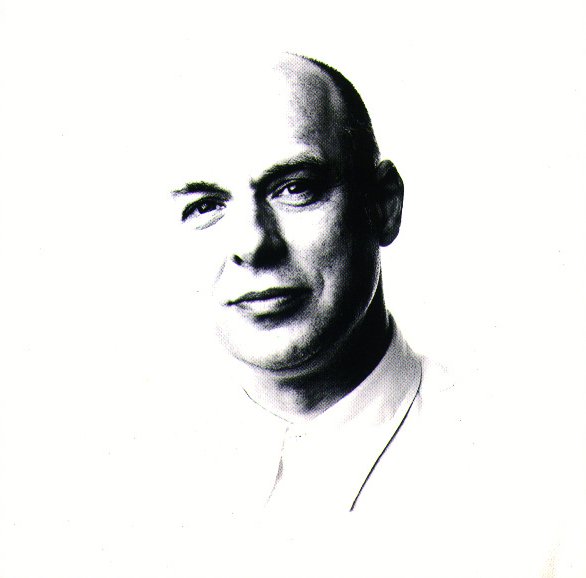
The image comes from the White Cube publicity card. The article was originally featured in Details magazine. Both appear on the Hyperreal website (logo below). Use of this material for noncommercial purposes is noted as allowable in the site's text.


Saturday, March 28, 2009

How many molecules can dance on the head of a pin?


For years, I’ve been struggling with the concept of postmodernism. The term is thrown around so carelessly. I’ve heard it used to describe everything from The Cure to graffiti art on skateboard decks. Deconstructionism, reductionism – these were just becoming au courant around the time I graduated from college, so I guess I missed out on the endless deconstruction of the meaning of the meaning of “meaning.”

In the blog Grain de musc’s March 26 entry, a very interesting discussion of the concept of minimalism, and whether it does or does not apply to the perfumery work of Jean-Claude Ellena, has come up. This has made me wonder if perfumery can ever be subjected to “postmodern” analysis.

My first exposure to contemporary art was to minimalism. Fifty aluminum blocks on the floor. A neon tube leaning against a gallery wall. A big, square canvas painted flat black. I knew I didn’t understand it, but was willing to accept it, and so I did. I didn’t know then that minimalism was a concept within the concept of the concept of postmodernism.

There is a continuum of representation that was conceived by one of postmodernism’s stars, Jean Baudrillard. It has four “stops,” left to right, the first of these being your basic reflection of reality, like a snapshot; then your “perversion” of reality -- say, an abstracted landscape painting. Then comes a pretense of reality, something which exists without a model, and finally the “simulacrum,” which is its own reality, refers to nothing but itself and has, in his view, replaced “reality” in modern societies.

In this view, cold-pressed oils, dried plants, natural animal essences or perfumes produced by enfluerage would be on the first stop. On the second might be essences produced in a more aggressive way – with heat, usually – that would resemble the natural material but not be completely authentic, for example, using synthetics to make recognizable floral scents. Third would be assembling molecules to make smells that are pleasant or interesting, but not recognizable as anything in particular.

I’d say Ellena’s work falls somewhere between the second and third categories on that continuum. And I suspect that the more radical modern perfumers would love to take the work all the way out to the simulacra, where the only referent is no referent. Something that smells…like itself. Better than the real thing. Better than any real thing.

When we describe a scent we say “It smells like ….” That might be “roses” or it might be “incense” or “wet concrete”. Is there a scent which has no model? How would we know?

Try to describe your favorite fragrances without using referents. Bet you can’t do it. The best I can do is say that a fragrance reminds me of another fragrance.

It appears that our minds need a referent to describe a smell, even to ourselves. If a perfumer made something truly new, his or her audience would still search for existing referents to perceive it, describe it or even appreciate it.

This is the riddle of this art. I hope it’s enough to shield perfumery as an art from endless philosophical postmodernist nitpicking about the concept of the meaning of the analysis of the meaning of the concept.

Monday, March 23, 2009

Two Arts

I’m a painter as well as a perfumista. I’m no art-world phenomenon, by any means. I just like to draw and paint, have been schooled, have exhibited some and sold a little.

My grandmother and a noisy and bohemian great-aunt, whom I adored, were artists, too. They worked in watercolor. As I began to paint and study, I very quickly learned that watercolor gets no respect. It’s for amateurs. Old ladies. (Sound familiar?) So, off I veered, into acrylics, then pastel, then oil, where the big boys play. I got reasonably proficient in all of these, and actually got pretty good at drawing the figure (rather useless, here in the Bible belt, where the nude figure is difficult to exhibit. Many shows won’t take them, especially if there is a school nearby, aaarrrgh!) but I digress. Oil and acrylic; you mix and layer, slather it on with a knife. Make that thick, textured surface. Stepping all over yourself; now, that’s the ticket – or it was, when I was learning.

Then, I went through a dry period. A book I read about dealing with such things said, “Return to what you love.” And I realized that what I loved – really loved – was pushing watercolor pigment around on the paper, watching it granulate, running the colors together to make new ones that were layered, not actually mixed, therefore luminous. I began using a pointed brush and working back into the color with water. The paintings were abstract, small and detailed.

I haven’t painted that much this last year; I’ve been busy studying perfume. So, last week, when I began to return to painting, I was surprised to discover that my style has changed. I’m content with “suggest” as opposed to “bludgeon”. As I painted, and the work seemed to paint itself without any conscious help from me (the true joy of this art, IMO) I began to wonder if all I’d learned in the world of scent might be the reason for the difference. That my preferences really have been leaning toward the light-handed, more modern, lately – the Ellenas particularly, but also the simpler Rosines, the best of which have a crystalline quality, and the greens. I didn’t expect this to appear in my painting, but it has.

I think back to all the reading I’ve done on perfumery. Ellena’s work in particular has been described as being very like watercolor. Done with a limited palette. Luminous. Ethereal.

This is something you have to pass through, I guess. From the over- to the understated, which presumes more taste in whoever is viewing (or smelling, or hearing, your work). Which also, of course, consigns you to the cognoscenti, but, hey, aren't we there already?


The watercolor painting, by me, is titled "Interior Landscape, Alaska." All rights reserved.

Saturday, March 7, 2009

Smells like Allyl Amyl Glycolate


So I finally decided that it was/is time I learned to identify some “notes.”

I was eight when I got my first chemistry set. I don’t know how any of us kids who grew up in the Sixties survived our childhoods. There were none of the safeguards protecting ourselves from ourselves that are so ubiquitous today. I mean, this chemistry set, made for and marketed to grade-school children, had stuff in it you could use to make gunpowder! It did include a warning – “Kids, don’t use this to blow up the house!” – but that was all.

I made some real stink-bombs with that chemistry set. I would find household materials – bleach, Hawaiian Punch, and once, a half-bottle of my mother’s Woodhue cologne – and throw that in, too. (My hide got tanned for that one, I must admit; something else that doesn’t happen to the kiddies any more but maybe should. But I digress.)

Could it be that I missed my calling?

Here it is a few, er, years later, and here I am with another chemistry set. This one includes aromachemicals and absolutes, designed to assist in the identification of notes, and in the making of one’s own fragrances, should one desire to do so.

I actually haven’t had much time to play around with these yet, but at least now I know which of the included musks I’m anosmic to (musk ketone). And which of these really stink (allyl amyl glycolate). I know who the schoolyard bully is (iso buytl quinoline, a.k.a. “leather”). And that perfumers have a tough, tough gig. I knew that before, but there is something about actually measuring these elixirs out, drop by precise drop, feeling that joy of creation if it works, or wondering why it didn’t smell like you expected, what you did wrong, what else you could put in to fix it, what might work to “lift” the fragrance or make it last, and so on, that brings it home in a way all the reading in the world can’t.

Of course, this is like sticking a toe in the Pacific. You can’t exactly say you went swimming. And it’s heavy on the aquatic and “fresh” notes, not my favorites. But, wow. I’m impressed. Impressed with how hard this is. Impressed with how much these people have to know.

I like to make materials. As an artist, I’ve made my own pastels. I’ve delved into pigments down to their molecular structure. I know color theory well, and all of that has made me a more confident painter. But this? Paint’s a piece of cake, a walk around the block, compared to this.

Perfumery truly is where art and science meet. We all rattle off that phrase. It’s one of the axioms of fragrance. But I don’t think I really understood what it meant until now.

I have no intention of attempting to become a perfumer. I’m content to swoon over artistry exhibited by the masters, and to write about how that artistry makes me think and feel. And, when discussing a fragrance, I’m content to say “lily of the valley” instead of “hydroxy citronellal,” and so is my spell-checker, to be honest. You know, it just sounds…prettier.

Does this mean I’m not a newbie anymore? Well, yes/no. After a year’s concentrated study and critique, I’ve learned a lot. But just looking at all these little bottles – a drop in the bucket – humbles me.

And takes me back in time, to when I was eight, making gunpowder in the back bedroom instead of doing my homework.


The kit I’m using is the “Perfumery Notes Kit” from The Perfumer’s Apprentice, http://store.perfumersapprentice.com/.
Photo copyright Andrev Kiselev. Used under license from Dreamstime.com.


Sunday, January 25, 2009

Cardamom

I shop for groceries at an international farmers’ market. Their spice section takes up an entire wall, and unlike the American couple-of-tablespoons-in-a-can supermarket product, their spices come in containers of four ounces or more. And they’re reasonably priced; sensory travel at bargain rates!

One spice I hadn’t experienced much before I discovered this place is cardamom. They sell lots, because my city has a large Indian population. A most exotic and exalted flavoring, it is one of the most expensive, too – only saffron and vanilla pods cost more.

In my exploration of perfume notes, I come across cardamom all the time. It’s in Ormonde Jayne’s “Man” and “Woman,” two of the most gorgeous fragrances out there. Jean-Claude Ellena used it in his India-themed Un Jardin Apres La Mousson of course, but it’s also in his Eau Parfumee au The Vert. It’s in L’Artisan’s Timbuktu and Chanel’s Pour Monsieur, Donna Karan’s Chaos and Malle’s Cologne Bigarade. Basenotes lists 331 scents that use it (and I’m sure there are more).

A little research opens all the history books, which is so often the case with spices. Cardamom, a member of the Zingiberaceae (ginger) family, is hugely ancient, so ancient that its root word is hard to define. The early Egyptians used it as a dentifrice. In Asia, it’s still used medicinally, for problems of the mouth, throat and lungs. The Vikings brought it home from Constantinople, where it is now a key ingredient of aquavit. The Arabs called it an aphrodisiac, and it’s still brewed with coffee throughout the Middle East. The Greeks and Romans made perfumes with it.

There are three forms: green is the most common, and is harvested in India. Not much makes it out for export, because it’s so common a food ingredient there. What we get in the U.S. is usually grown in Central America. The black form, which is a little more smoky and camphorous than the green, is part of garam masala – and also shows up in Dolce & Gabana’s “D + G By For Men” and Paco Rabanne’s “Black XS.” There’s also a white form, used mostly in Scandinavia for baking. And it’s a common ingredient of the spiced tea masala chai.

So what does pure cardamom smell and taste like? Primary research time:

The pod, when chewed, is papery and tough. I can see why it was once used as a toothbrush. The black seeds inside contain the flavor. I chewed some of them and...man. There’s sweetness, quickly eclipsed by bitter lemon rind-like taste. Then comes menthol and camphor, a greenish Eucalyptus, and a slight numbing of the tongue. Smelling the crushed pods and seeds reveals the camphor, and when deeply inhaled it cools the nasal passages.

I left the crushed pods out overnight. Their scent this morning had a fruitiness that wasn’t there initially. It had mellowed, become more aromatic, but without the overwhelming Vicks Vap-O-Rub-like camphor of the just-crushed seeds.

It was Eau Parfumee au The Verte that renewed my interest in fine perfumery, which had been more or less dormant for years prior to that. I had no idea what the ingredients were and no desire to find out then; I just knew I loved the perfume. Smelling it now, with a mortar full of crushed cardamom pods alongside, I think: of course. Cardamom.

Perfumery is where we rediscover the world.


For a dessert from “Gourmet” that features cardamom as well as other perfume essences like oranges, bergamot, black tea, dried fruit (and vanilla, if you serve it over ice cream) called “Oranges and Prunes in Cardamom Tea Syrup” follow this link:

http://www.epicurious.com/recipes/food/views/Oranges-and-Fruits-in-Cardamom-Tea-Syrup-100871.

Cardamom photo by Kelly Cline.